135 private links

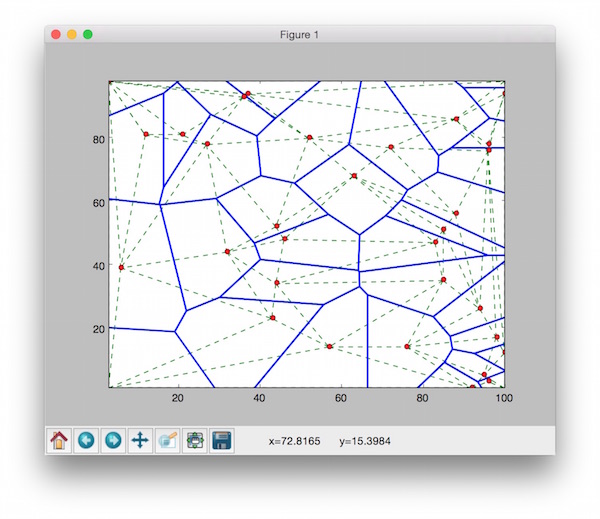
We shall introduce PyDelaunay as a practical spatial construction. It is an efficient Python implementation of Voronoi/Delaunay Tessellation, which can be served as the Basic Map of the neighbourhood concept.
FriendlyARM launched an $8 open source, 40 x 40mm “NanoPi Neo” SBC that runs Ubuntu Core on a quad-core Allwinner H3. It's Ethernet-ready, but headless.
This tutorial shows how to use eCryptfs to encrypt a directory on Ubuntu 16.04. eCryptfs is a POSIX-compliant enterprise-class stacked cryptographic f...
Just when you thought you’d heard, read and seen absolutely everything there is to about QR codes, along comes this little story to make you sputter in your corn flakes. Earlier this month, the craft-store chain Michael’s was hit with a lawsuit for the use of QR codes in its circulars by QR code company Neomedia, according to 2DCode.com. Um…and …
Part 1 of 2: "The Road to Superintelligence". Artificial Intelligence — the topic everyone in the world should be talking about.
script is an open source tool that makes a typescript of everything displayed on your terminal. It is useful for students who need a hardcopy record of an interactive session as proof of an assignment, as the typescript file can be printed out later with lpr.
Everything between the script and the exit command is logged to the file. This includes the confirmation messages from script itself (unless the -q flag is used). Everything between the script and the exit command is logged to the file. This includes the confirmation messages from script itself.
Recorded shell sessions can be shared using online services. The advantage of sessions recorded in this format from the usual screencasts is that shell instructions can be easily copy/pasted from the player screen.
Useful command:
script --timing=time.txt script.logand to replay
scriptreplay --timing=time.txt script.logSee also the nice -d (divisor, speeds up playback) and -m (max delay in playback) options for replay.
Summary
- ttystudio - Excellent terminal-to-gif recorder
- asciinema - Record and share terminal sessions
- Shelr - Broadcast plain text screencasts
- Showterm - Terminal record and upload utility
- TermRecord - Terminal session recorder with easy-to-share self-contained HTML output
- ttyrec - Terminal recorder, incudes a playback tool
- IPBT - High-tec terminal player
- tty2gif - Record scripts into both binary and gif formats
- termrec - Set of tools for recording and replaying tty sessions
- script - The granddaddy of terminal recorders
An extremely simple, pluggable static site generator.
Moto Mods are accessories made for the Motorola Moto Z phone.
They can be plugged onto the Moto Z and can be equipped with custom sensors and electronics, to expand the capabilities of the phone.
Just draw the symbol you are looking for into the square area above and look what happens!
IoT is considered as one of the key enabling technologies for the fourth industrial revolution, that is known as Industry 4.0. In this paper, we consider the mechatronic component as the lowest level in the system composition hierarchy that tightly integrates mechanics with the electronics and software required to convert the mechanics to intelligent (smart) object offering well defined services to its environment. For this mechatronic component to be integrated in the IoT- based industrial automation environment, a software layer is required on top of it to convert its conventional interface to an IoT compliant one. This layer, that we call IoTwrapper, transforms the conventional mechatronic component to an Industrial Automation Thing (IAT). The IAT is the key element of an IoT model specifically developed in the context of this work for the manufacturing domain. The model is compared to existing IoT models and its main differences are discussed. A model-to-model transformer is presented to automatically transform the legacy mechatronic component to an IAT ready to be integrated in the IoT-based industrial automation environment. The UML4IoT profile is used in the form of a Domain Specific Modeling Language to automate this transformation. A prototype implementation of an In dustrial Automation Thing using C and the Contiki operating system demonstrates the effectiveness of the proposed approach.
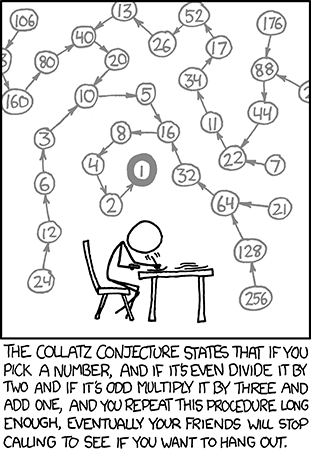
Nice representation of Collatz's sequence.
How to understand whether you know what a flowchart is.
Recording a terminal session may be important in helping someone learn a process, sharing information in an understandable way, and also presenting a series of commands in a proper manner. Whatever the purpose, there are many times when copy-pasting text from the terminal won't be very helpful while capturing a video of the process is quite far-fetched and may not be always possible. In this quick guide, we will take a look at the easiest way to record and share a terminal session in .gif format.